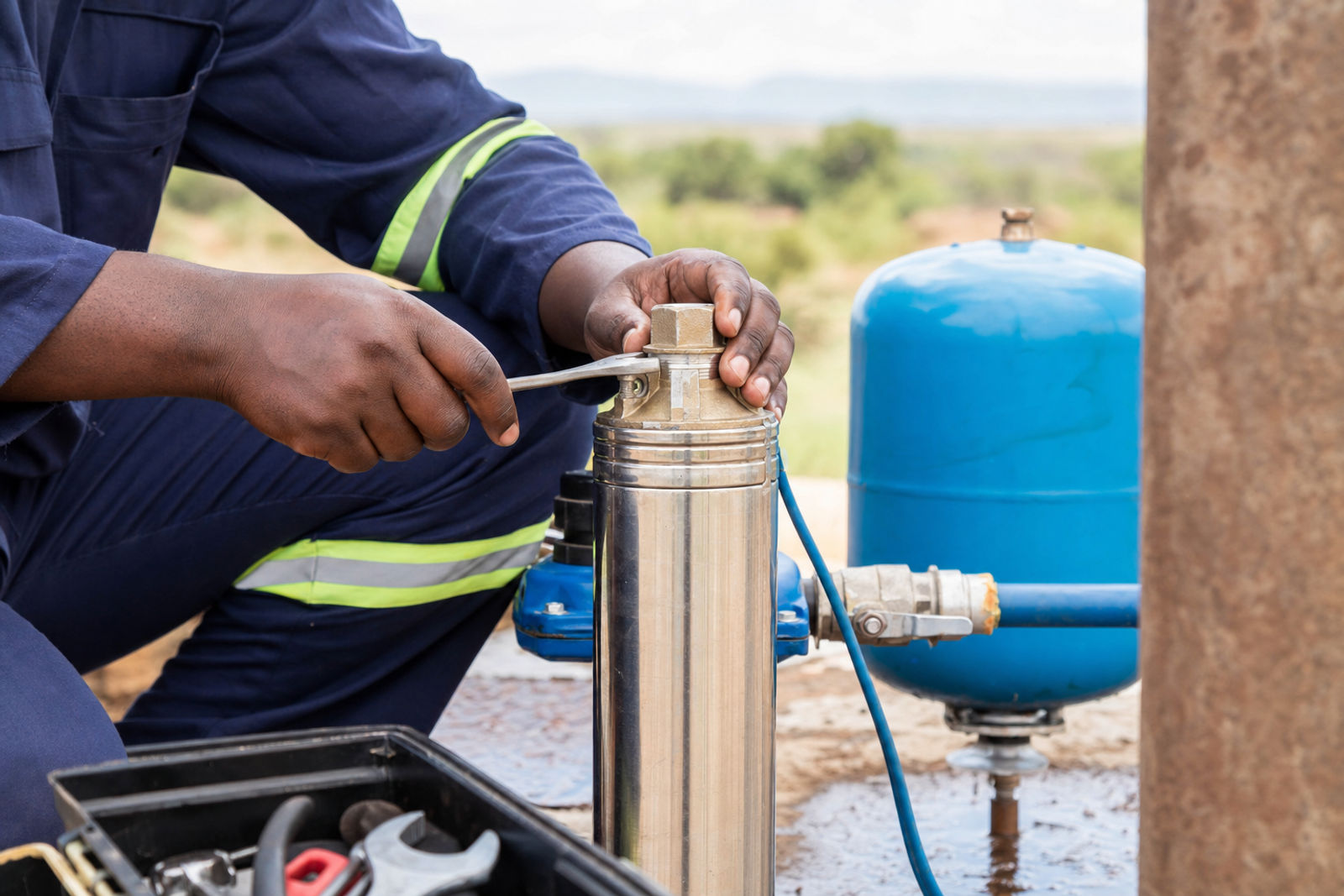
Your borehole pump is the heart of your water system. Like any mechanical device, it requires regular care to operate efficiently. Neglecting maintenance can lead to premature failure — and a pump replacement costs R18,000–R40,000 — a bill that's entirely avoidable with proper care.
Whether your borehole is in the dolomitic geology of Centurion (where dissolved minerals cause accelerated scaling) or the granite belt of Sandton, this maintenance guide will help you maximise your pump's lifespan.
Why Pump Maintenance Is Non-Negotiable
A well-maintained submersible pump lasts 12–15 years. A neglected one fails in 5–8 years. That difference represents R25,000–R40,000 in avoided replacement costs — plus the inconvenience of days without water while you wait for a technician.
Regular maintenance also protects your borehole itself. A failing pump can introduce contaminants, damage the casing, or even become stuck in the borehole — requiring expensive extraction procedures. Prevention is always cheaper than cure.
Monthly Check-Up Routine
Homeowners can perform these simple checks monthly — no technical skills required:
- Listen to the Pump: Unusual grinding, clicking, or vibrating sounds often indicate wearing bearings or a motor winding issue. Catch it early.
- Check Cycle Times: If your pump is turning on and off too frequently (short-cycling), it may indicate a pressure tank failure, a leak in the system, or a waterlogged pressure tank.
- Inspect the Well Head: Ensure the seal is intact to prevent surface water contamination. Look for cracks in the concrete collar, insect entry points, or signs of flooding around the borehole cap.
- Monitor Water Pressure: A gradual drop in pressure over weeks could indicate pump wear, a developing leak, or a dropping water table. Record your normal pressure reading for comparison.
- Check Your Electricity Bill: A sudden spike in electricity consumption can indicate a pump motor struggling against increased friction — an early sign of bearing failure.
Annual Professional Service
At least once a year, hire a qualified borehole technician to perform a professional service. This typically includes:
- Pulling the pump and inspecting for wear, corrosion, and scaling
- Checking motor windings and electrical connections
- Inspecting the rising main (pipe from pump to surface) for cracks or blockages
- Testing and recalibrating the pressure switch and tank
- Chemical flush if scaling or biological fouling is detected
- Water quality test (SANS 241) to ensure potability
A professional service costs R1,500–R3,000 depending on pump depth and type. Find a reliable service provider through our contractor directory or read our contractor vetting guide.
Warning Signs: When Something's Wrong
These symptoms require immediate attention — ignoring them risks catastrophic pump failure:
- Sputtering or Air in the Water: The pump may be drawing air, indicating a dropped water level or a cracked rising main.
- Cloudy or Discoloured Water: Could indicate sediment intrusion, casing failure, or biological contamination. Stop using the water for drinking immediately and get it tested.
- Pump Running Continuously: A pump that never shuts off has either a major leak, a failed pressure switch, or an empty borehole. Turn it off immediately to prevent burnout.
- Tripping Circuit Breaker: An overloaded motor is drawing excess current. This typically means seized bearings or a motor winding failure.
- Sand or Grit in the Water: The borehole screen may be damaged, allowing fine particles to enter. This abrades pump impellers and shortens pump life dramatically.
Water Quality Monitoring
Changes in water colour, smell, or taste can indicate fouling, bacterial growth, or chemical changes in your aquifer. We recommend testing annually for domestic use, and quarterly if using the water for drinking.
Common water quality issues by area:
- Krugersdorp (Iron-rich): Brown staining on walls and laundry — requires an iron removal filter.
- Centurion (Dolomitic): Hard water and limescale buildup — requires a water softener.
- Shallow boreholes (East Rand): Higher risk of bacterial contamination — UV sterilisation recommended.
For a complete guide to water treatment options, read our filtration and purification guide.
When to Call a Professional
Some situations require expert intervention. Call a professional immediately if:
- You notice a significant, sudden drop in water pressure
- Your electricity bill spikes unexpectedly
- The pump makes unusual noises or vibrations
- Water becomes discoloured, smells, or contains visible particles
- The pump trips the circuit breaker repeatedly
Find a certified maintenance professional through our service directory — all listed contractors are verified for credentials and insurance.
Frequently Asked Questions
How often should I service my borehole pump?
Annual professional servicing is the minimum recommendation. In areas with hard water (dolomite geology) or high iron content, bi-annual servicing may be necessary. Monthly visual and auditory checks should be done by the homeowner.
How much does pump maintenance cost?
Annual maintenance costs R1,500–R3,000 for a residential borehole. A full pump pull, inspection, and chemical flush costs R3,000–R5,000. Compare this to a pump replacement at R18,000–R40,000.
How long does a borehole pump last?
A well-maintained submersible pump lasts 12–15 years. Without maintenance, expect 5–8 years. Pump lifespan depends on water quality, usage patterns, and geology.
Can I monitor my pump remotely?
Yes. Smart borehole monitoring systems can track pump status, flow rate, and water levels in real-time, sending alerts to your phone if issues are detected. Read our IoT monitoring guide.
Ready to Start Your Borehole Project?
Connect with verified contractors in your area. Get a free site assessment and personalised quote.
Related Guides
Related Articles
Borehole Maintenance Checklist — Annual, Monthly & After Load Shedding
A complete maintenance guide for South African borehole owners. What to check monthly, annually, and after load shedding events — with warning signs that mean your pump is about to fail.
GuidesHow to Finance a Borehole in South Africa: Cash, Home Loan, or Personal Loan?
A complete guide to borehole financing options in SA — home loan readvance, personal loans, pension-backed loans and cash. Real 2026 rates from FNB, Absa, Nedbank and Capitec compared.
Getting StartedThe Gautrain Borehole Incident: What Every SA Homeowner Must Know Before Drilling
In February 2025, an unauthorised borehole in Killarney caused R1 million in Gautrain tunnel damage and a 10-day service suspension. Here's what the law actually requires — and how to drill safely and legally in 2026.